
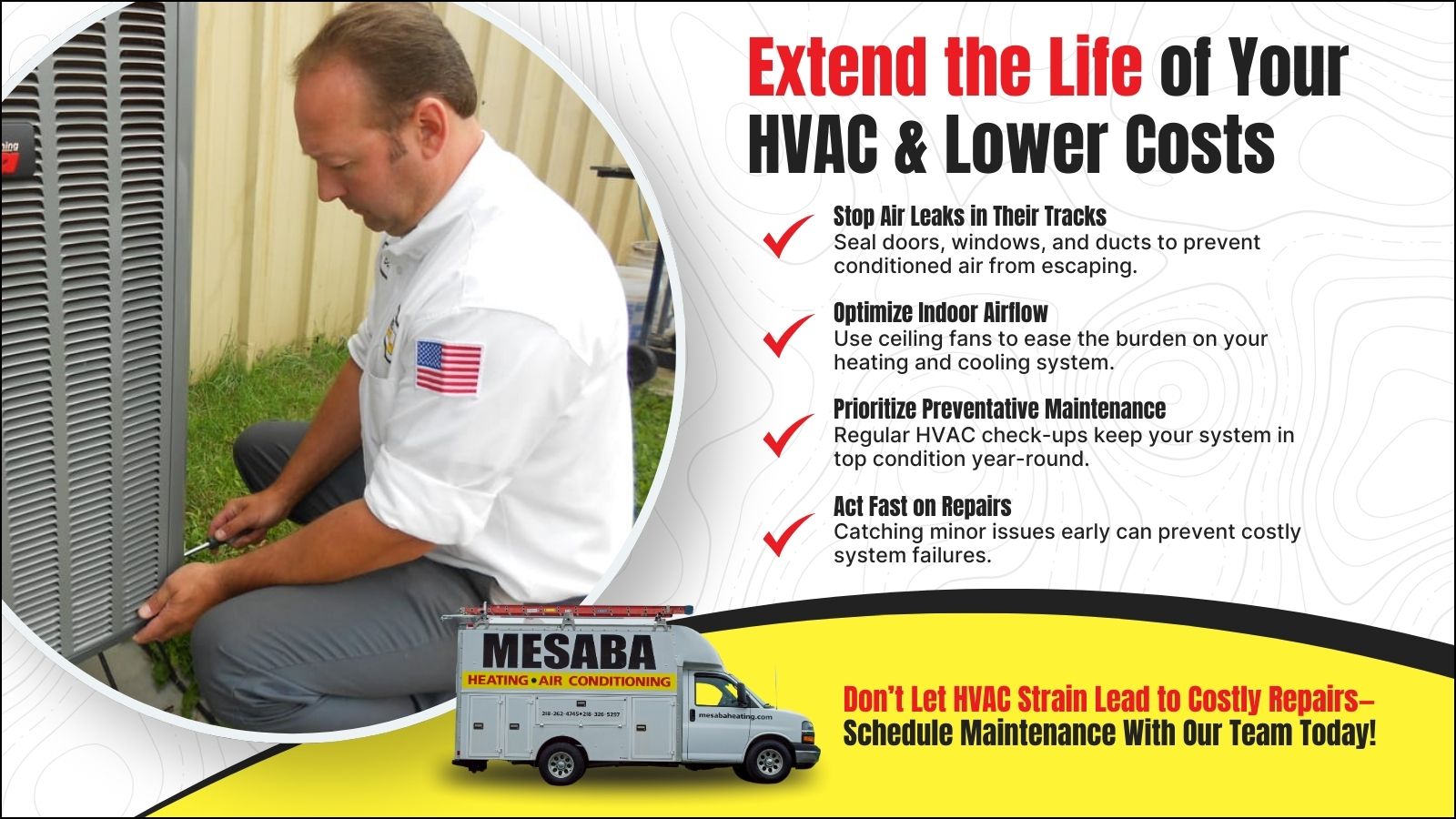
Your heating, ventilation, and air conditioning (HVAC) system works hard to keep your home comfortable year-round. However, excessive use can lead to higher energy bills, premature system wear, and costly repairs. By implementing a few smart strategies, you can reduce your HVAC usage while still maintaining a comfortable indoor environment. Here’s how you can optimize performance and extend the lifespan of your HVAC system in Nashwauk, MN.
How often should you schedule furnace and AC maintenance?
- Change filters every 1–3 months to keep airflow strong and reduce system strain.
- Clean vents and registers regularly to limit dust buildup and uneven airflow.
- Keep the outdoor unit clear of leaves, grass, and debris so the system can “breathe.”
- Book AC maintenance once a year in spring so it is ready for heavy summer use.
- Book furnace maintenance once a year in fall to improve reliability before cold weather.
- Address odd noises or higher bills fast because small issues can turn into major repairs.
1. Seal Up Drafts to Prevent Energy Loss
One of the biggest culprits of HVAC overuse is air leakage. Drafts around windows, doors, and vents allow conditioned air to escape, making your system work harder than necessary. To prevent energy loss:
- Inspect doors and windows for gaps and apply weather stripping or caulk where needed.
- Check your attic and basement for leaks, as these areas often have hidden drafts.
- Use door sweeps to block gaps at the bottom of exterior doors.
- Seal ductwork to prevent air from escaping before it reaches your rooms.
By taking these steps, you can keep warm air in during winter and cool air in during summer, reducing strain on your HVAC system.
2. Utilize Ceiling Fans for Better Air Circulation
Ceiling fans are an underrated tool for climate control. They don’t lower or raise the actual temperature but help distribute air more efficiently, reducing your reliance on heating and cooling.
- In summer, set ceiling fans to rotate counterclockwise. This pushes cool air downward, creating a wind-chill effect that makes you feel cooler.
- In winter, reverse the direction (clockwise) to gently pull cool air upward and push warm air down, keeping the room warmer without cranking up the heat.
By using ceiling fans in conjunction with your HVAC system, you can adjust your thermostat by a few degrees without sacrificing comfort.
3. Invest in Routine Maintenance
Like any machine, your HVAC system requires regular upkeep to function at its best. Routine maintenance helps prevent breakdowns, improve efficiency, and extend the system’s lifespan. Key maintenance tasks include:
- Changing air filters every 1-3 months to prevent airflow restrictions.
- Cleaning vents and registers to remove dust buildup.
- Inspecting the outdoor unit to ensure it’s free of debris and obstructions.
- Scheduling professional HVAC tune-ups at least once a year—ideally in the spring for AC and in the fall for heating.
A well-maintained system operates more efficiently, using less energy and reducing overall wear and tear.
4. Get Professional Repairs Promptly
Ignoring HVAC issues can lead to bigger, more expensive problems down the road. If you notice unusual noises, inconsistent temperatures, or rising energy bills, it’s time to call a professional for HVAC repair.
Prompt repairs can:
- Prevent further damage to critical components.
- Improve efficiency, reducing your system’s workload.
- Save money by addressing small problems before they turn into costly breakdowns.
Waiting too long to fix minor issues can result in complete system failure, forcing you into an expensive replacement sooner than necessary.
Reducing HVAC use isn’t just about cutting energy costs—it’s also about keeping your system in top condition for years to come. By sealing up drafts, using ceiling fans, maintaining your system regularly, and addressing repairs quickly, you can enhance performance, extend longevity, and enjoy a comfortable home without overworking your HVAC.
Start implementing these strategies today, and your HVAC system will thank you with improved efficiency and fewer repair bills!
Frequently Asked Questions
Question: Why does reducing HVAC use help performance and system longevity?
Answer: Running your HVAC nonstop increases wear on key components and can drive up energy bills. By cutting unnecessary runtime, your system cycles less, stays cleaner, and avoids strain that leads to breakdowns. Smart habits like sealing drafts, using fans, and staying on maintenance help the system last longer.
Question: What are the most effective ways to reduce HVAC use without losing comfort?
Answer: Start by sealing drafts around doors, windows, and any leaky ductwork so conditioned air stays inside. Use ceiling fans to improve circulation, then adjust the thermostat a few degrees. Combine these changes with routine maintenance and quick repairs so the system does not work harder than necessary.
Question: Which direction should a ceiling fan spin in summer and winter to support HVAC efficiency?
Answer: In summer, set the fan to spin counterclockwise to push air downward and create a breeze effect, helping you feel cooler at a higher thermostat setting. In winter, reverse it to clockwise at a low speed to gently move warm air down from the ceiling, reducing heating demand.
Question: How often should I change HVAC air filters to prevent overworking the system?
Answer: A good rule is every 1 to 3 months, depending on filter type, pets, dust, allergies, and how often the system runs. A dirty filter restricts airflow, which forces the HVAC to run longer and can cause uneven temperatures. Checking monthly helps you replace it before performance drops.
Question: When should I schedule HVAC repairs instead of waiting?
Answer: Book service as soon as you notice unusual noises, inconsistent temperatures, short cycling, or a sudden rise in energy bills. Small issues can stress other components and turn into expensive failures if ignored. Prompt repairs restore efficiency, reduce system workload, and can help you avoid an early replacement.
Reach out to Mesaba Heating & Air Conditioning today. Service to you is success to us!